


 English
 Español

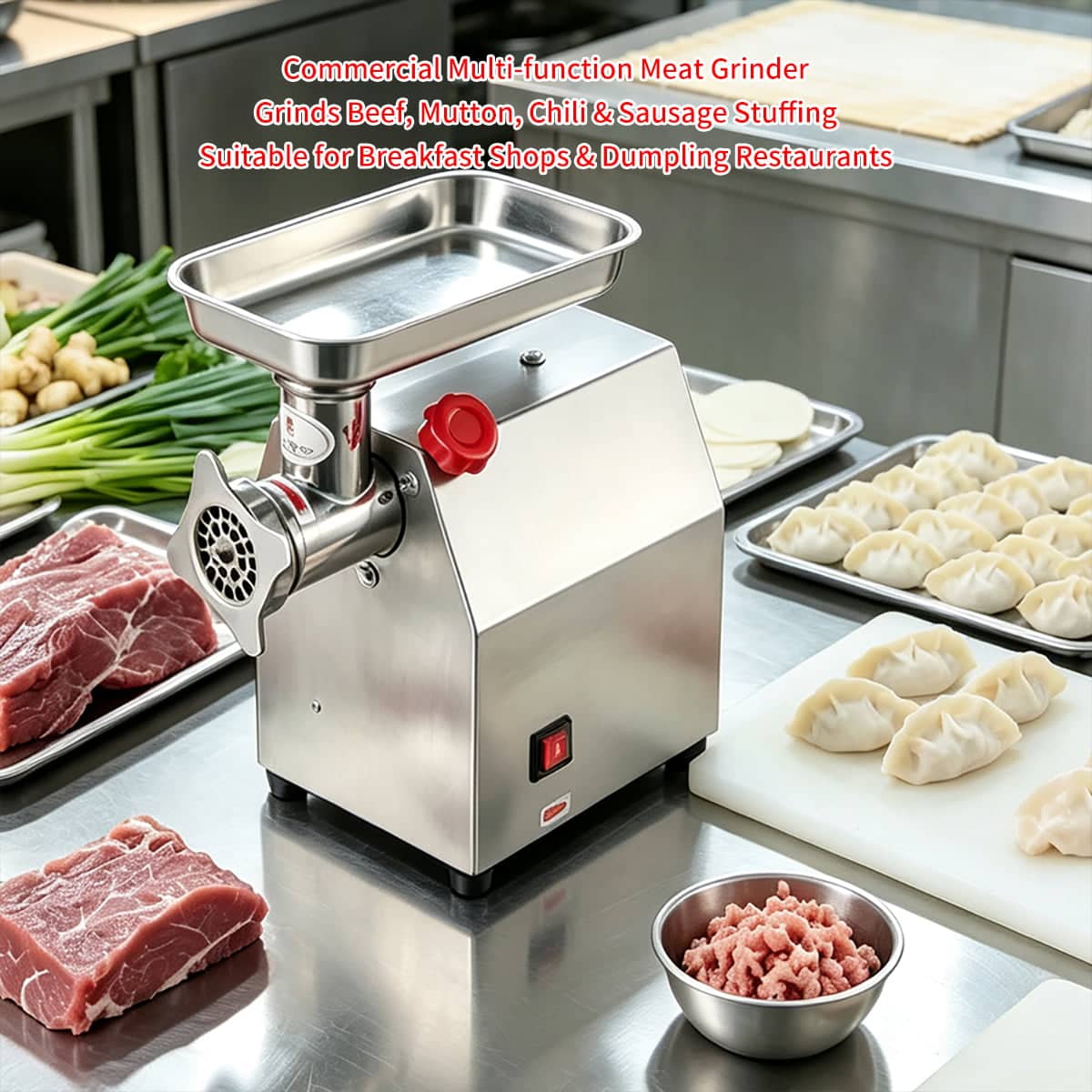
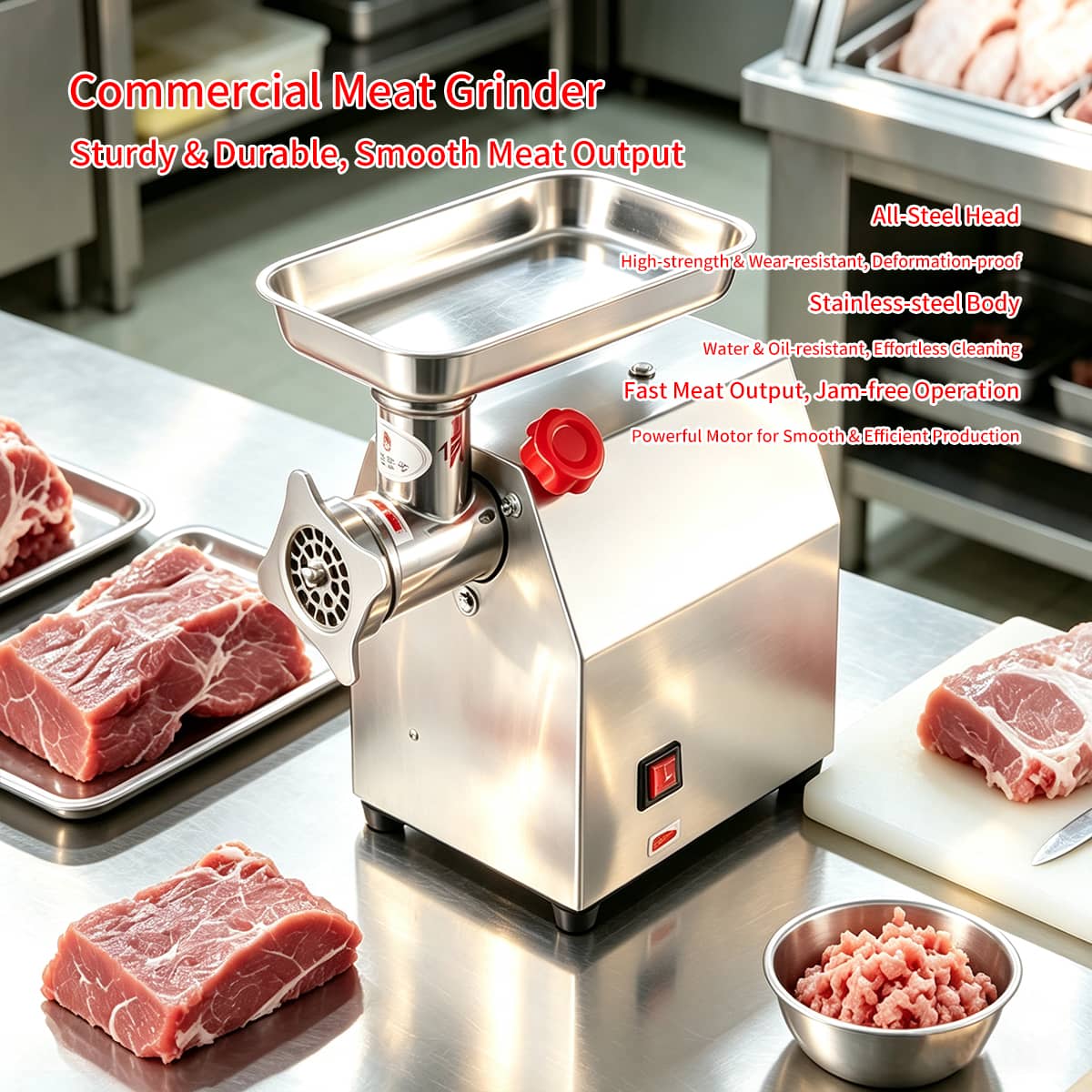
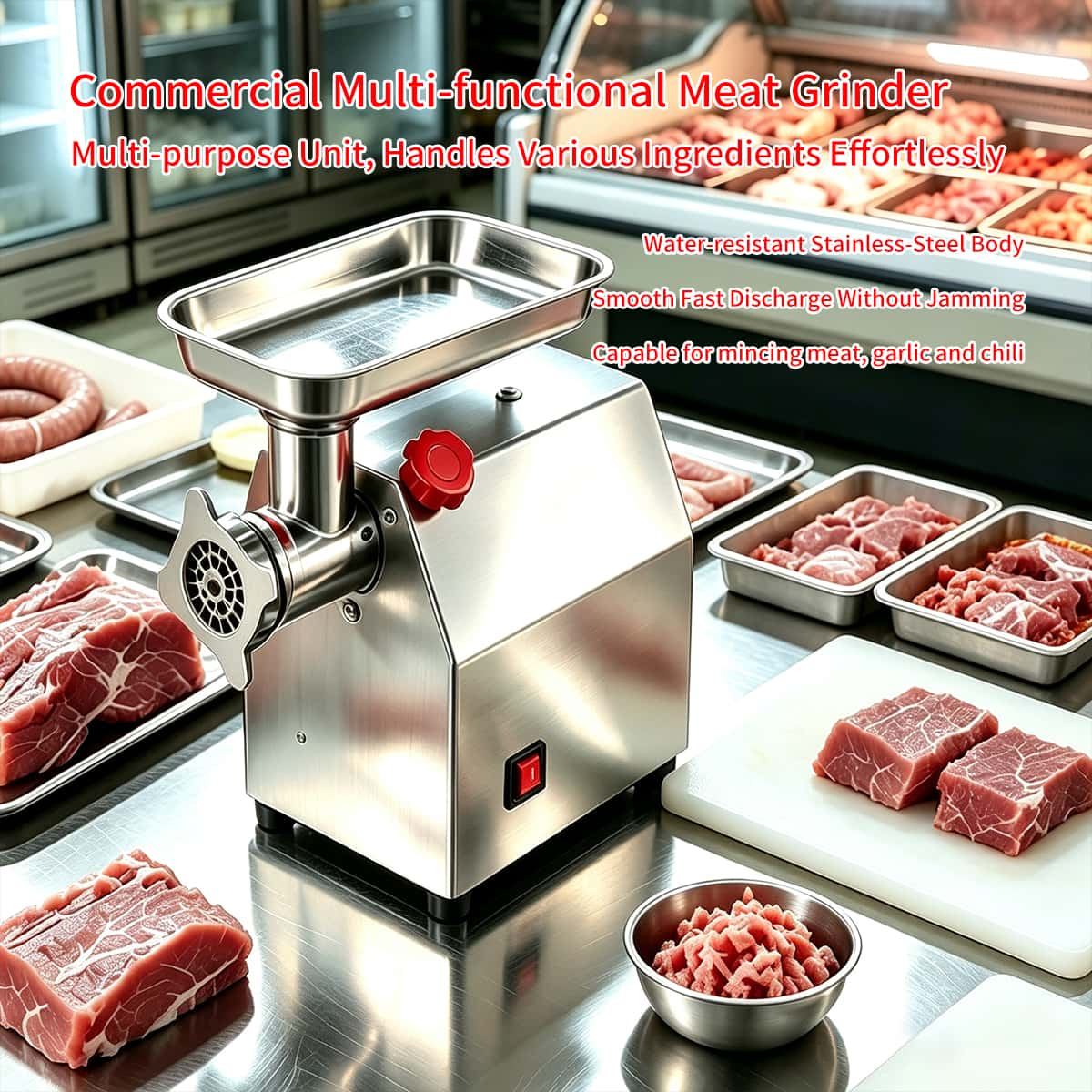
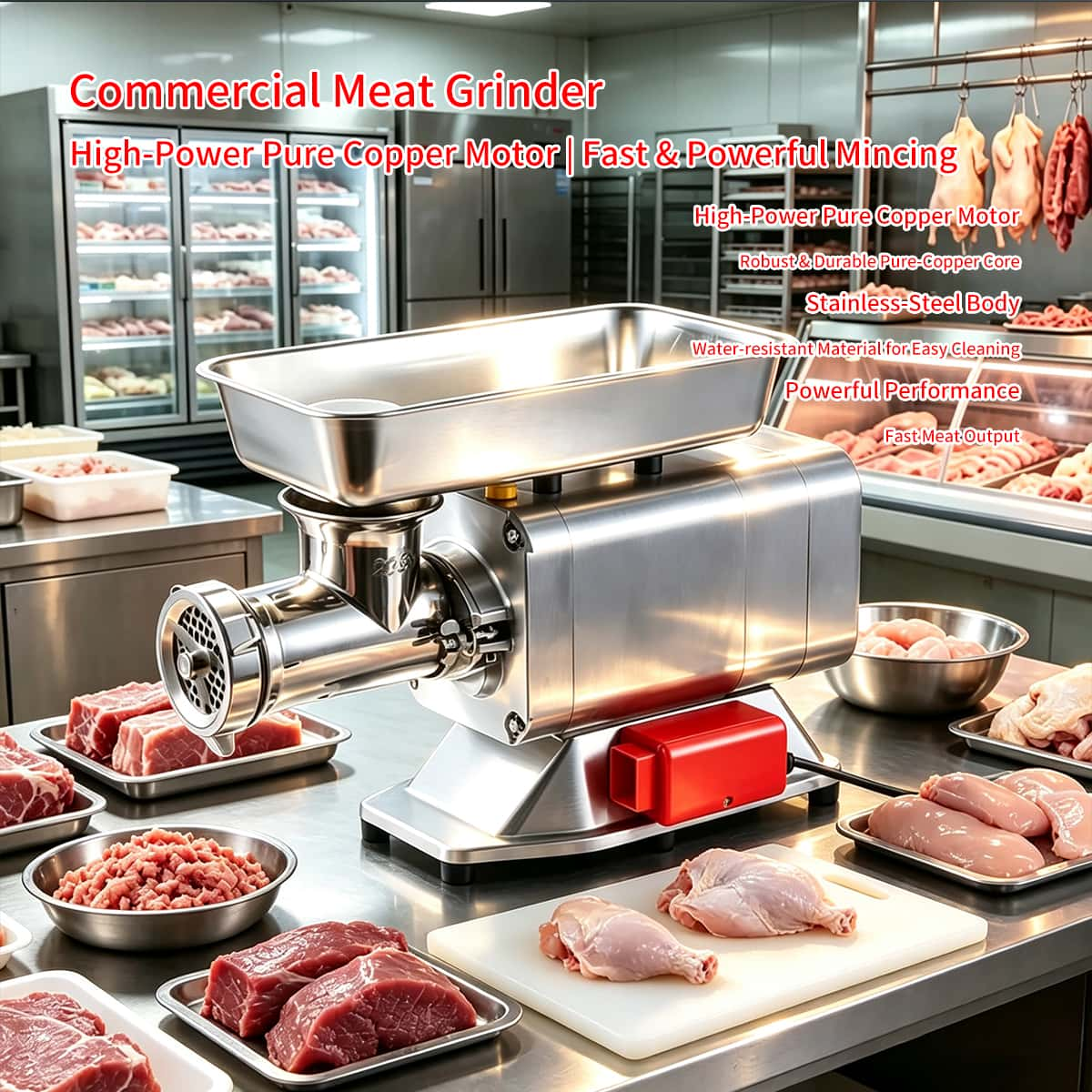
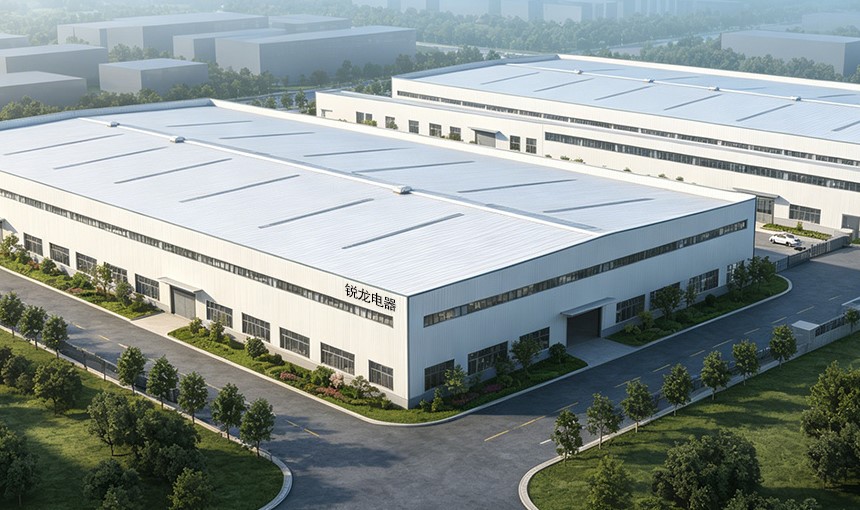
Yongkang Ruilong Electric Appliance Co., Ltd. manufactures commercial meat grinders under the SIPPON brand at our Yongkang, Zhejiang facility, working from the hardware and electromechanical supply chain that the region is known for. We handle structural design, sheet metal processing, motor matching and final assembly in house, so a heavy duty electric grinder leaves our line as a complete, tested unit rather than an assembled kit of outsourced parts.
As Custom Heavy Duty Electric Grinder Suppliers, we build table-top and heavier commercial mincers for butcher shops, canteens, dumpling and bun restaurants, central kitchens and prepared-meat workshops. The range covers Model 12 and Model 22 platforms in semi-steel and all-steel construction, with voltage, appearance and configuration adapted to the destination market.
What We Manufacture in This Category
Our grinder family is organised around two frame sizes and two body constructions. Model 12 suits counters where space is tight and daily volume is moderate; Model 22 carries a larger grinding head and a 1500 W motor for continuous mincing of pork, beef, mutton, chicken and duck. Semi-steel versions combine a stainless steel food-contact assembly with a painted structural housing, while all-steel versions use stainless steel through the body for wetter, more washdown-heavy environments.
- Food-grade stainless steel contact parts — grinding head, auger, knife and plates are removable for cleaning.
- Durable copper motor — matched to the frame size rather than shared across the range.
- Interchangeable grinding plates — fine, medium and coarse hole diameters set the final texture.
- Cross double-blade knife — cuts evenly and resists wear under repeated production cycles.
- Safety feed inlet — wide hopper with a protective guard that keeps hands clear of the blade.
Model Range and Application Fit
The table below sets out the platforms we supply, their published capacity bands and the working environments each one is built for. Capacity figures are stated per model and depend on meat type, temperature, plate selection and operator feeding rhythm.
| Model | Construction | Motor Power | Stated Capacity | Typical Fit |
|---|---|---|---|---|
| Model 12 semi-steel meat mincer | Semi-steel | 900 W | 100–150 kg/h | Small shops, canteens, fresh meat counters |
| Model 12 all-steel meat grinder | All-steel | 900 W | 100–150 kg/h | Washdown kitchens, dumpling and bun prep |
| Model 22 semi-steel meat mincer | Semi-steel | 1500 W | 100–250 kg/h | Butcher shops, cooked-food workshops |
| Heavy-Duty Model 22 all-steel meat mincer | All-steel | 1500 W | 100–250 kg/h | High-hygiene lines, continuous prep shifts |
Material and Workpiece Considerations
Grinder selection starts with what goes into the hopper. Our machines are designed for fresh, boneless meat — pork, beef, mutton, chicken, duck, rabbit and other lean cuts — as well as thawed frozen meat, pork belly and minced rib meat. Feeding is continuous and uniform, and the auger geometry is set to move product through without bridging or clogging.
Operating boundaries we confirm with every order:
- Hard bone and incompletely thawed frozen blocks are excluded — they damage the knife, plate and auger.
- Reinforced configurations can accept meat containing small soft cartilage.
- Fat ratio and sinew content affect throughput and the texture achieved at a given plate size.
Granularity Control Through Plate Selection
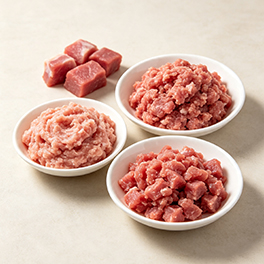
Final product texture is set mechanically, not by operator judgement. Changing the cutting plate changes the mince specification, and the same machine can serve several product lines across a shift.
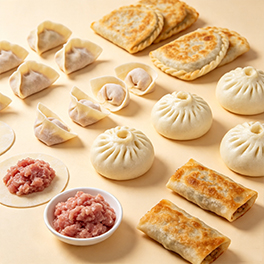
- Fine plate — meat paste for dumplings, wontons, soup dumplings, fish balls and chicken balls.
- Medium plate — uniform ground meat for stuffed buns, stuffed pancakes, potstickers and meat patties.
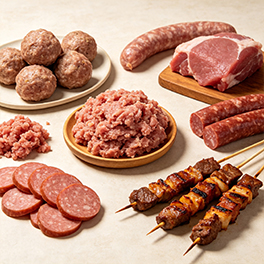
- Coarse plate — meat granules for handmade meatballs, lion's head meatballs, meatloaf and braised fillings.
- Downstream use — coarse granules also serve as base material for sausages, cured sausages, air-dried sausages and grilled sausage preparation.
Electrical Configuration and Customisation
Voltage is the first customisation point on nearly every export order. Model 12 and Model 22 platforms are available in 220 V 50 Hz or 110 V 60 Hz, with dual-voltage options for distributors who stock a single SKU across markets. Beyond electrical configuration, we adapt machine appearance and build details to the customer's specification.
- Voltage and plug standard matched to the destination market.
- Semi-steel or all-steel body construction on the same frame.
- Plate sets selected to the customer's product mix.
- Appearance and branding adjustments for distributor programmes.
Installation, Cleaning and Maintenance
These are table-top machines with compact footprints, so installation is a matter of a level, stable counter position and a suitable power point rather than civil works. The grinding head, auger and cutting plates disassemble separately, which lets staff clean the full product path and leave no meat residue behind between shifts.
Wearing parts are dimension-standardised across our models, and we hold stock so replacement knives, plates and augers can be supplied without a long production wait. That interchangeability keeps repair downtime short and reduces the spare-parts inventory a distributor needs to carry.
Quality Control and Documentation
Because we complete structural design, sheet metal processing, motor matching and assembly ourselves, quality control is applied at each of those stages rather than only at final inspection. Machines are built with thick stainless steel bodies and copper motors, corrosion-resistant and easy to clean, to meet commercial food hygiene requirements.
Each unit ships with a standardised documentation set: operation manual, exploded part diagrams, maintenance guidance and the compliance certificates that accompany the model. This supports staff training on arrival and simplifies import handling for the receiving business.
Where Our Grinders Sit in a Full Prep Line
Mincing is one step in back-of-house preparation, and we build the surrounding equipment on the same engineering basis. Customers configuring a complete line typically pair a grinder with our Vegetable Cutting Machine for vegetable prep and a Bowl-type Dough Mixer for dough and filling mixing, so mince, vegetable and dough output arrive at the same station at the same rate.
Information We Use to Configure Your Solution
A workable proposal needs the working point, not just a model number. We prepare the configuration and quotation from the following inputs.
| Input | What It Determines |
|---|---|
| Meat types and fat ratio | Frame size, knife and plate specification |
| Required output per shift | Model 12 or Model 22 platform |
| Target mince texture | Plate hole diameters supplied with the unit |
| Destination voltage and frequency | Motor and electrical configuration |
| Washdown and hygiene regime | Semi-steel or all-steel body construction |
| Counter footprint and layout | Machine dimensions and station arrangement |
| Branding and packaging requirements | Appearance customisation and carton specification |
Frequently Asked Questions
What capacity can a heavy duty electric grinder deliver?
Our Model 12 platform is rated at 100–150 kg/h with a 900 W motor, and the Model 22 platform at 100–250 kg/h with a 1500 W motor. Actual output depends on meat type, fat content, temperature, plate selection and how steadily the hopper is fed.
Can you supply machines for 110 V markets as well as 220 V?
Yes. Both platforms are available in 220 V 50 Hz or 110 V 60 Hz, and dual-voltage options are offered for distributors who need one specification across several markets.
What is the difference between semi-steel and all-steel models?
Both use food-grade stainless steel for the parts that contact meat. All-steel versions extend stainless steel through the body, which suits kitchens that wash equipment down frequently; semi-steel versions use a painted structural housing and are the more economical choice for drier prep areas.
Can the grinder handle frozen meat or bones?
Thawed frozen meat is within scope. Hard bone and incompletely thawed frozen blocks are not — they damage the knife, plate and auger. Reinforced configurations can process meat containing small soft cartilage.
How are the machines cleaned and serviced?
The grinding head, auger and cutting plates disassemble separately for full cleaning of the product path. Wearing parts are dimension-standardised across models and held in stock, so replacements ship without a long production wait.
What documentation ships with each unit?
Every machine includes an operation manual, exploded part diagrams, maintenance guidance and the compliance certificates applicable to the model, which supports operator training and import handling.