

 English
 Español

Contact us
Need more information about Ruilong solutions? Need to contact Ruilong sales or after sales assistance? Get in touch!

Content
A 300-meal canteen that preps 45 kg of cabbage, carrot, cucumber and onion for one service still hands 70 to 90 minutes of knife work to a single cook every day. That figure is what sends kitchens looking for an electric fruit and vegetable slicer, and it is also the figure that should decide which machine gets ordered.
Buyers who get it right compare three numbers before signing: kilograms per hour during the 30-minute peak, cut thickness repeatability from the first item of a batch to the last, and the minutes an operator needs to strip the cutting head after service. Buyers who get it wrong compare blade counts and wattage stickers.
An electric fruit and vegetable slicer is a motor-driven commercial machine that pushes produce past a fixed or interchangeable blade set to produce slices, strips, julienne or dices at a set thickness. On countertop models the cutting head defines the shape; on belt-fed models a mechanical feed defines the cut length.
Below roughly 200 kg of produce per day, the choice sits between a tabletop single-inlet machine and a countertop multi-function cutter. Above that volume the decision moves to a belt-fed machine, and the trade-offs shift from footprint and price to belt width, discharge height and power supply.
The cutting head, not the motor, decides the shape of the output: an electric fruit and vegetable slicer feeds produce past a blade or grid, and that geometry determines whether the result is a 3 mm slice, a 4 mm julienne strip or a 10 mm dice.
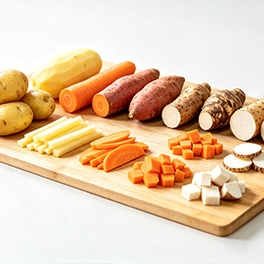
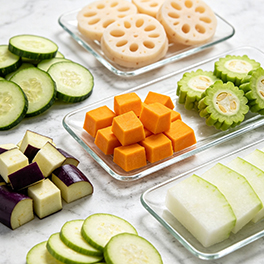
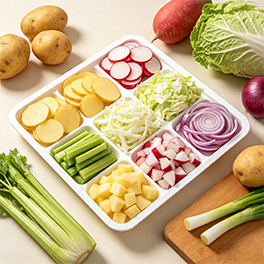
Four cut families cover almost every commercial menu:
Dicing is where machine class matters most. A countertop unit with a dicing grid cubes produce in a single pass, but the operator must keep the feed steady. A belt-fed machine sets cut length mechanically through belt speed and blade position, so repeatability comes from settings rather than from rhythm.
 RL-6 Double Inlet Commercial Multifunctional Vegetable CutterStainless steel slicer, shredder, and dicer with dual-feed chute, angled feed for long produce, and interchangeable blades for commercial kitchens.View Product →
Thickness control is the second specification, and the one buyers skip. A deli selling coleslaw against a fixed recipe cannot absorb a 4 mm slice at the start of a batch and a 6 mm slice at the end, because dressing absorption and holding time both shift with thickness. Before ordering, ask for the millimetre range of every blade set and run 20 kg of the densest produce through the machine, checking the last 2 kg as closely as the first.
Repeatability is what a commercial slicer is really selling. A machine that doubles output but drifts 2 mm across a batch creates a new problem instead of removing one.
Motor wattage describes torque on dense produce and duty cycle, not output volume: feed opening size, blade aperture and loading rhythm set the hourly rate, and one commercial vegetable range covers four jobs with published ratings of 550 W, 750 W, 1,000 W and 3,000 W.
Those ratings sit on the granular chopping side of the range, where machines produce small particles for fillings rather than slices: RT220 at 550 W, RT280 at 750 W and RT320 at 1,000 W are high-speed stainless granular machines, while the 450 model runs a 3,000 W four-blade head for large-granular vegetable mincing in dumpling and baozi production. Slicers are quoted in kilograms per hour per produce type instead.
Wattage earns its place in two situations: raw beet, celeriac and cold potato, where the motor pushes a dense load through the blade, and continuous duty, where the machine runs without a cooling pause. Ask for the duty rating, continuous or minutes per hour, rather than the peak figure on the label.
| Machine class | Main cut work | Planning volume per shift | Operator attention |
| Tabletop single-inlet slicer | Slices of cucumber, lemon, garlic, herbs | 20 to 50 kg | Batch feeding |
| Dual-inlet countertop cutter | Slices, strips, dices of cabbage, carrot, potato | 50 to 200 kg | Continuous feeding |
| Belt-fed cutting machine | Adjustable-length cuts for line production | 200 to 800 kg | Loading only |
| Granular chopper 550 to 3000 W | Fillings and minced vegetable particles | 100 to 600 kg | Batch control |
A single-inlet machine feeds one way and swaps blade sets to change cuts; a dual-inlet machine adds a second chute so operators can move between long produce and round produce, or between two cut sizes, without unbolting the head. The second chute buys changeover seconds, not extra cutting power.
 RL-6 Single Inlet Commercial Stainless Steel Vegetable Slicer Shredder DicerCompact single-inlet benchtop cutter with 8×11 cm feed chute and interchangeable blades for slicing, shredding, dicing, and strip cutting.View Product →
Both configurations in this range are built as stainless countertop units on single-phase power, which matters more than it sounds. A site without three-phase supply cannot rewire a three-phase machine to a domestic circuit, so confirm voltage, phase and rated current against the circuit the machine will actually run on, and keep it on the dedicated breaker the manual specifies.
A commercial slicer should strip down by hand in under two minutes and wash in 5 to 10 minutes, and across 300 or more operating days a year that routine becomes the largest single labour item in owning the machine.
The 90-minute figure is arithmetic, not marketing: three changeovers per day at five minutes saved each, six days a week. Food-contact parts should be 304 stainless steel, and the paperwork matters as much as the material. In the European Union, food-contact materials fall under Regulation (EC) No 1935/2004; the United States benchmark is FDA 21 CFR Part 177, and hygiene design guidance in EN 1672-2 expects machines to be cleanable without tools and free of crevices that trap residue.
Three details decide whether a machine survives a busy kitchen: blade guard release by hand, a feed chute wide enough to reach with a brush, and a storage bracket for the blade set. A loose set in a drawer is both a cut risk and the reason changeovers get skipped.
Belt-fed vegetable cutting machines hold a continuous flow: one operator loads, the belt carries produce through a fixed blade, and cut length is set mechanically, so a 500 kg shift keeps the same specification from the first crate to the last.
The differences are structural rather than cosmetic. Cut length follows belt speed and blade position instead of an operator's hand, discharge height can be matched to a prep table or a second conveyor, and output stops depending on how tired the person feeding the machine is at hour three. Settle five points early: belt width against your largest produce, discharge height against existing tables, single-phase or three-phase supply, guarding and emergency stop layout, and the wash-down routine for the belt itself, which takes longer than any other part.
 Commercial Conveyor Belt Type Automatic Multi-Function Vegetable Cutting MachineStainless belt-fed vegetable cutter for slicing, shredding, dicing, and segmenting, with adjustable settings and modular blade assembly for high-volume prep.View Product →
Yongkang Ruilong Electric Appliance Co., Ltd. builds this equipment in Yongkang, Zhejiang, where the local hardware chain covers stainless fabrication and motor assembly, and the same factory supplies countertop cutters, granular choppers and dough machines, so a kitchen can standardise blades, grids and service on one supplier. The full commercial food processing equipment range is listed by category.
Size on the peak 30 minutes, then add 30 percent headroom. A kitchen that preps 60 kg of vegetables across a day but pushes 25 kg of it through the slicer between 09:00 and 09:30 needs 50 kg per hour of machine capacity, not 60 kg per day. Ask for output figures per produce type, because cabbage, potato and cucumber do not feed at the same rate.
Yes for anything that touches produce. 304 stainless resists the organic acids in tomato, lemon and onion, and food-contact compliance is documented under Regulation (EC) No 1935/2004 in the EU and FDA 21 CFR Part 177 in the US. Ask for the material certificate and the food-contact declaration with the quotation, and check that the blade guard and feed pusher are named in it.
It pays for itself when a kitchen switches between slice and strip or dice work more than twice per service, because each manual changeover costs 5 to 10 minutes plus a wash-down. Below roughly 50 kg of produce per day, a single-inlet machine usually wins on price, footprint and cleaning time.
Plan on 5 to 10 minutes per changeover and the same again at end of service. EN 1672-2 hygiene design expects tool-free dismantling and no residue-trapping crevices, so a head that needs a screwdriver will be cleaned less often than it should be.
Three numbers decide the purchase: kilograms per hour at peak, millimetres of blade range, and minutes to strip the cutting head. Everything else is a preference.
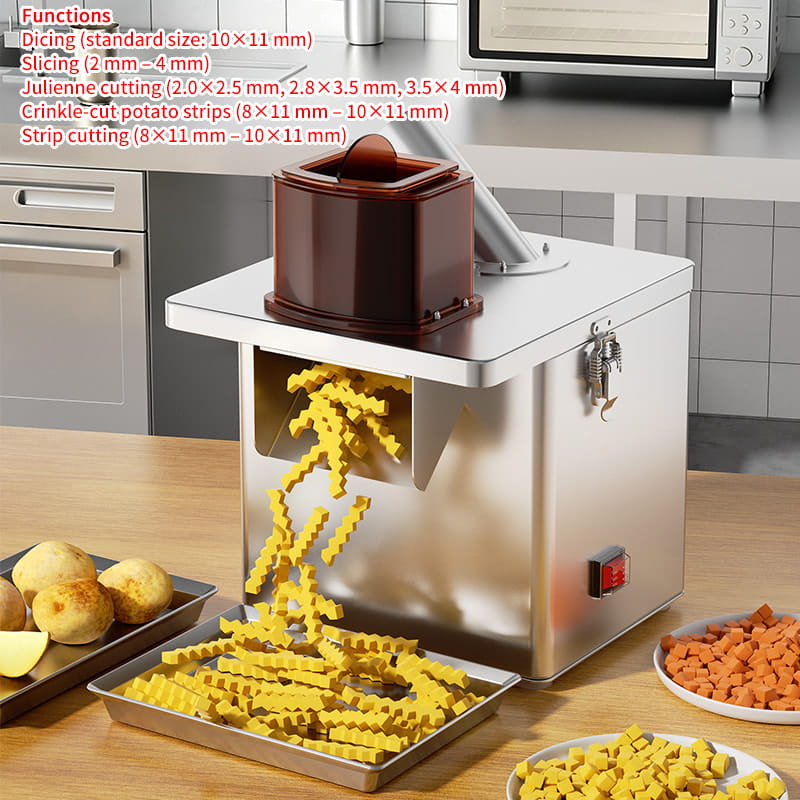 RL-6 Double Inlet Commercial Multifunctional Vegetable Cutter, Stainless Steel Fruit Melon Slicer Shredder Dicer for Restaurant Catering
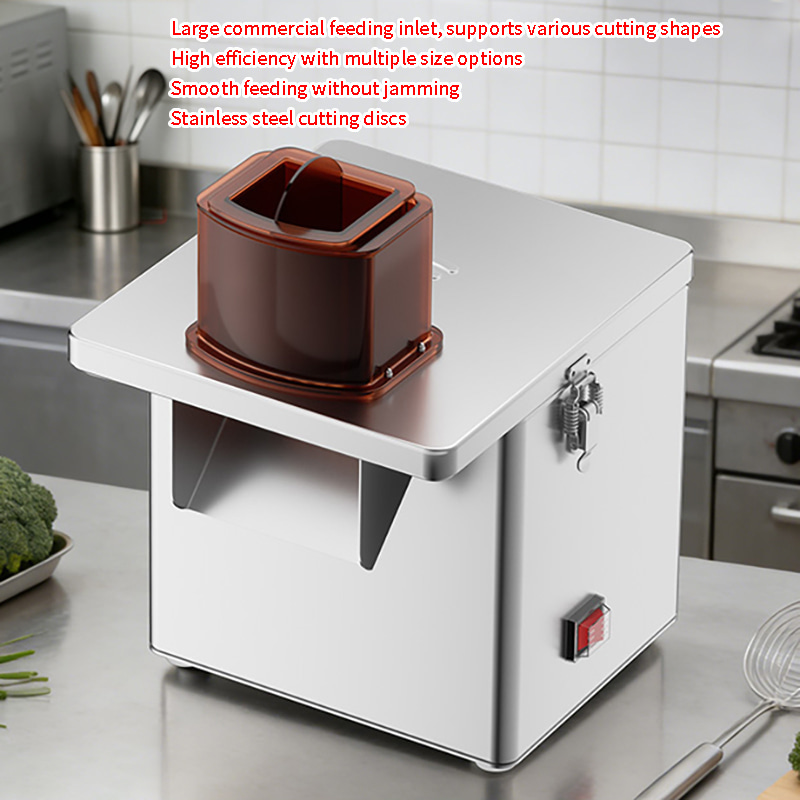 RL-6 Single Inlet Commercial Veg Cutter, Stainless Steel Fruit Melon Slicer Shredder Dicer Kitchen Food Processor
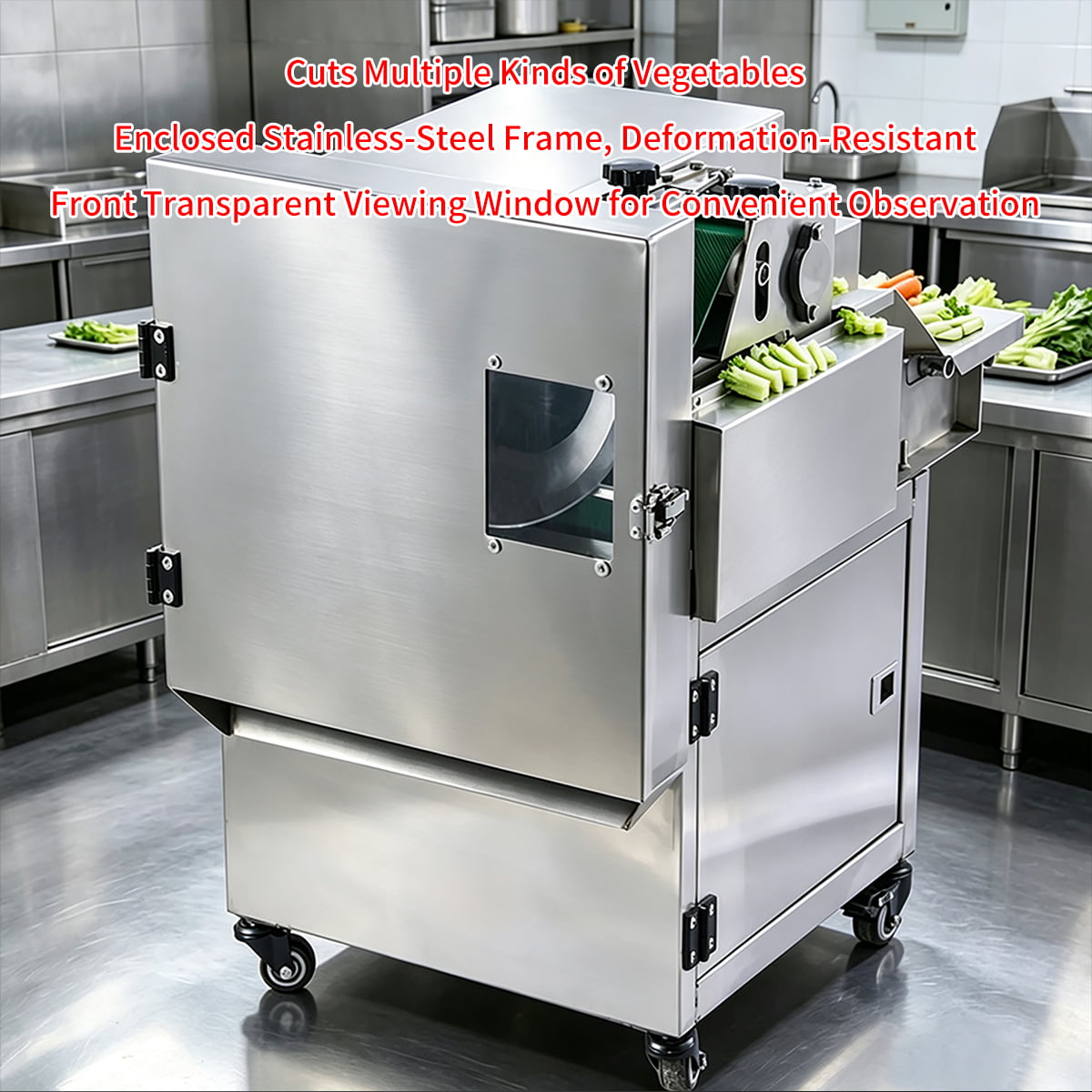 Commercial Conveyor Belt Type Multi-Function Automatic Vegetable Cutting Machine
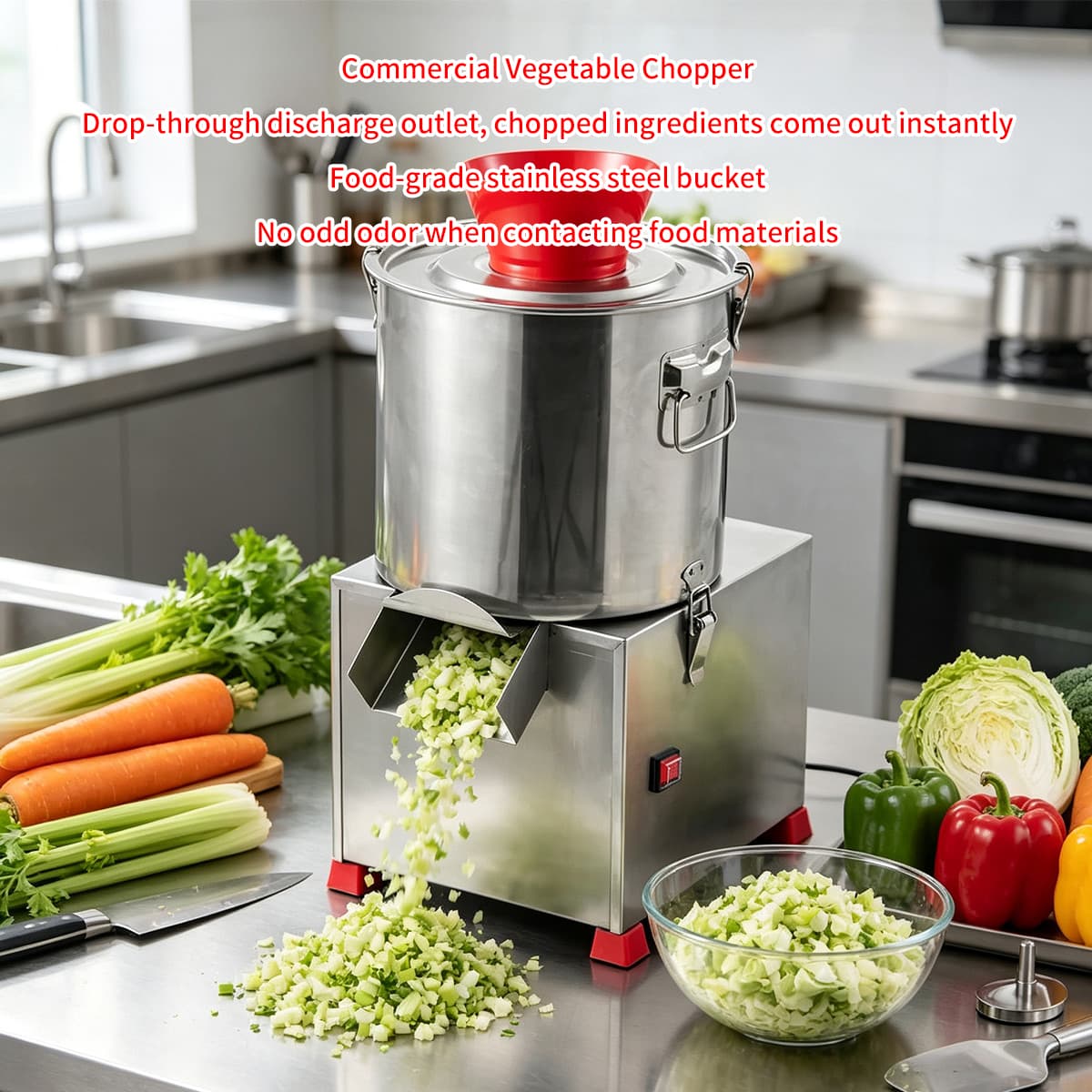 RT220 Granular Type Commercial Vegetable Machine, 550W High Speed Stainless Steel Food Chopper for Making Vegetable Granules
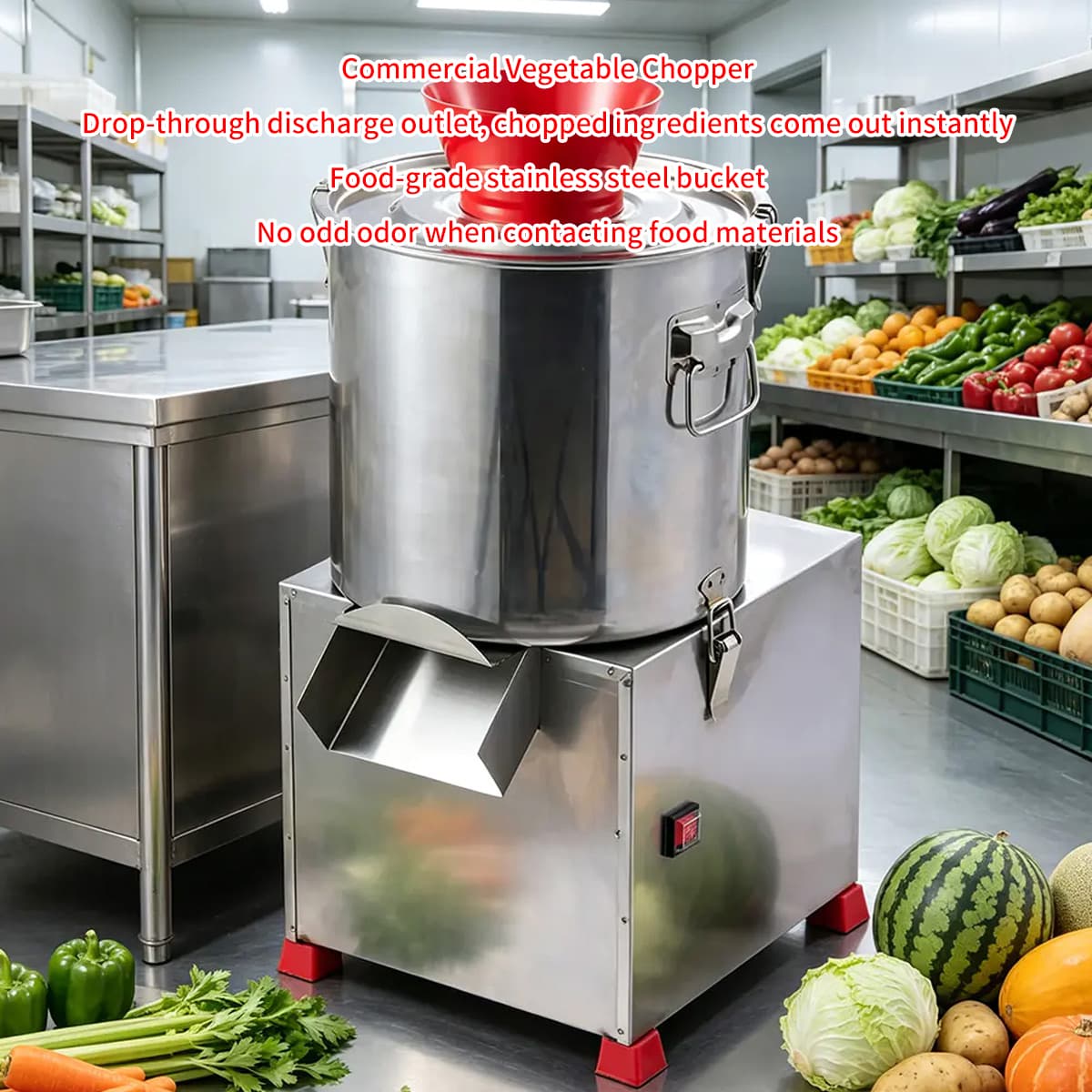 RT280 Granular Type Commercial Vegetable Stuffing Chopper,750W High Speed Stainless Steel Food Processor for Vegetable Granule Making
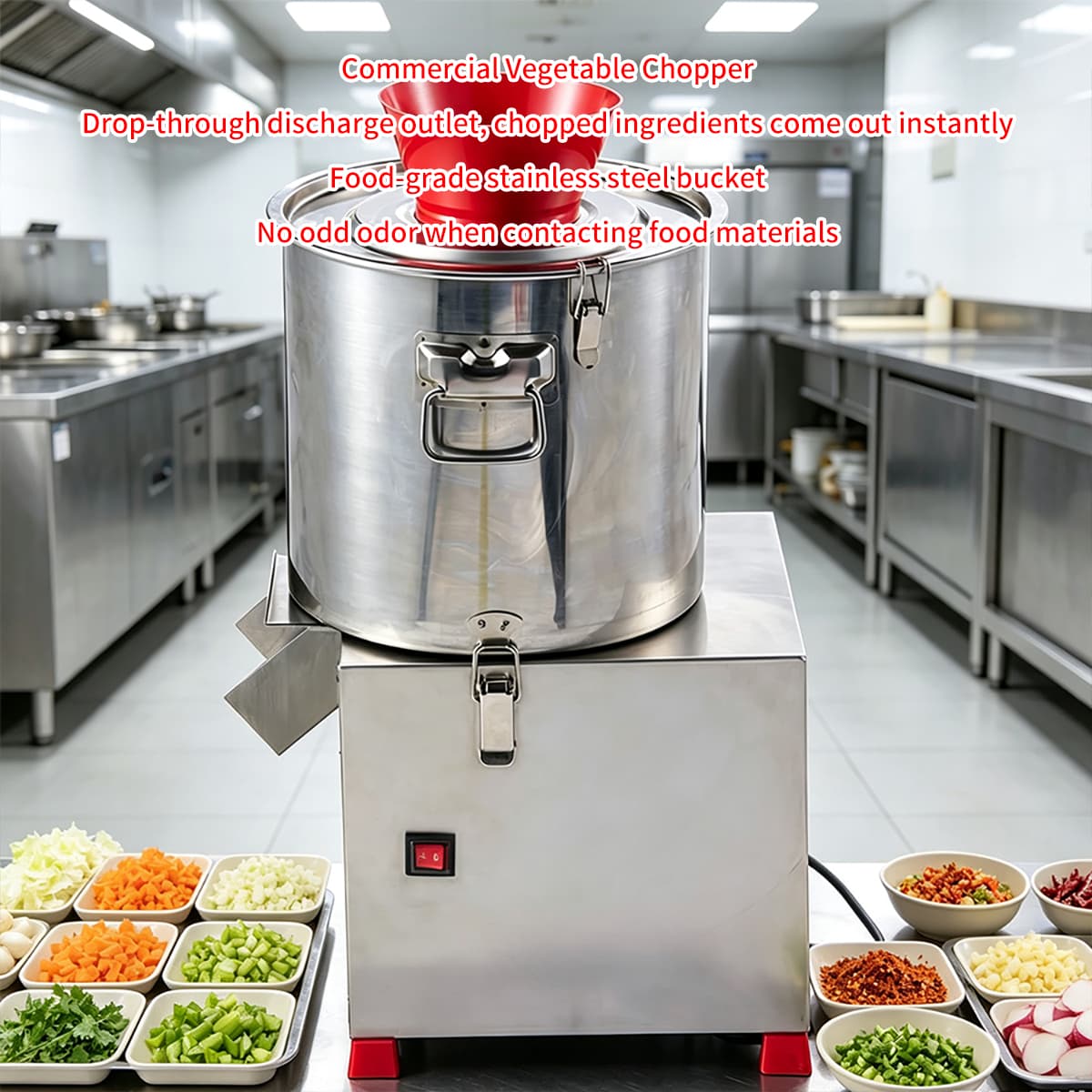 RT320 Granular Commercial Vegetable Machine, 1000W High Speed Stainless Steel Food Processor for Vegetable Granule Production
Need more information about Ruilong solutions? Need to contact Ruilong sales or after sales assistance? Get in touch!
+86 15868095986
659871326@qq.com
Rm 2, 5/F, East of Block A, 127 Jinniu Rd, Xiangzhu 1 Village (Natural Village), Xiangzhu Town, Yongkang, Jinhua, Zhejiang, China

 | Login